
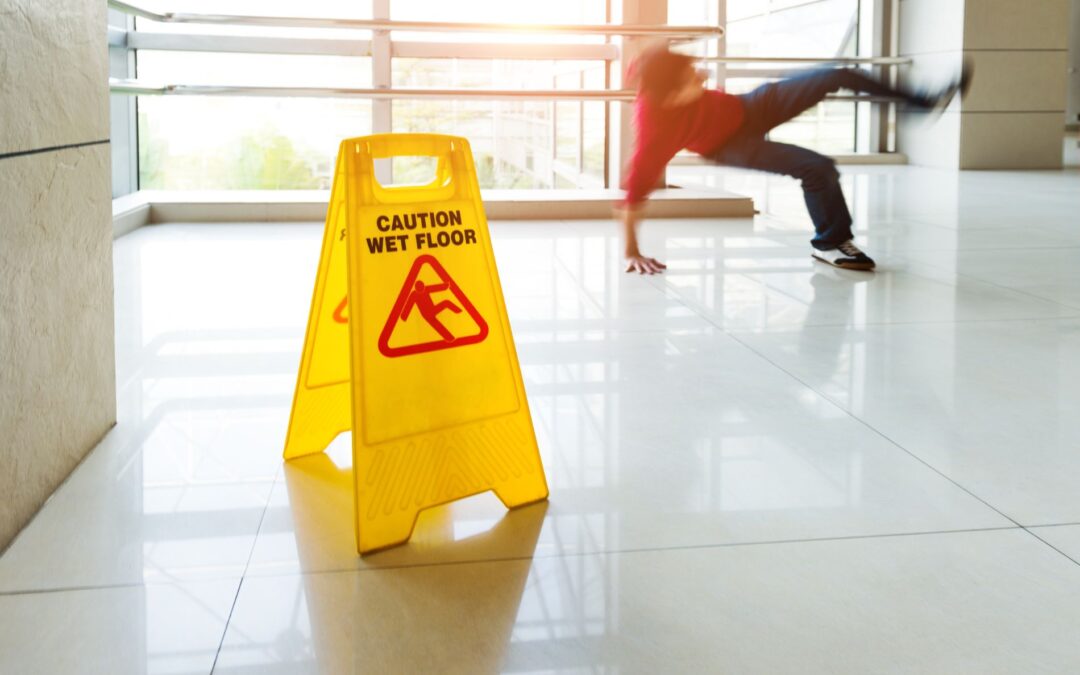
Slip and fall accidents can result in serious injuries with long-lasting consequences, making it imperative to understand your legal rights when filing a personal injury claim in Florida. Property owners, including business owners and landlords, have a duty to maintain their premises in a reasonably safe condition and address any known hazards promptly. When they fail to do so, and an injury occurs as a result, they may be held liable for the damages.
In this guide, we’ll discuss the details of Florida’s premises liability laws, which govern slip and fall accident cases. We will explore key elements that a claimant must prove to establish property owner liability, important steps to take following a slip and fall accident, and the role of an experienced personal injury attorney in helping you seek fair compensation for your injuries.
Florida’s Premises Liability Laws
Premises liability laws dictate the legal obligations of property owners to safeguard their premises and the people who enter them. It applies to public and private properties, such as commercial businesses, residential homes, and government-owned properties. Under Florida law, property owners have a duty to maintain their premises in a reasonably safe condition and to address any known hazards promptly.
When a slip and fall accident occurs, the injured party (the plaintiff) must prove the property owner’s negligence to establish liability. Florida premises liability law classifies visitors as invitees, licensees, or trespassers, and the level of care owed to each person varies based on this classification.
In most slip and fall cases, the injured person is an invitee or licensee, such as a customer or guest. Property owners have a duty to exercise reasonable care to keep their premises safe and warn such visitors about any known dangers that might not be obvious to the untrained eye.
Establishing Negligence and Liability
To successfully pursue a slip and fall claim in Florida, the injured party must prove that the property owner breached their duty of care, resulting in injuries. This requires establishing the following key elements:
1. Duty of care: The property owner had a legal obligation to provide a reasonably safe environment for the injured person.
2. Breach of duty: The property owner failed to maintain their premises in a safe condition or failed to address known hazards.
3. Causation: The property owner’s negligence was the direct cause of the slip and fall accident.
4. Damages: The injured person suffered verifiable injuries and losses as a result of the accident.
An essential aspect of proving negligence in a slip and fall case is demonstrating that the property owner had knowledge of the hazard and did not take reasonable steps to remedy it or warn the visitor.
Steps to Take Following a Slip and Fall Accident
If you’ve been involved in a slip and fall accident, taking the following steps can help protect your rights and ensure that you have the necessary evidence to pursue a premises liability claim:
1. Report the accident: Notify the property owner, manager, or landlord about the incident immediately. Ensure they document the accident and provide you with a report copy.
2. Gather evidence: Take photos of the scene, the hazard that caused your fall, and any visible injuries, as well as obtain contact information for any witnesses.
3. Seek medical attention: Even if your injuries seem minor, seeing a doctor promptly is crucial. This will help establish the connection between the accident and your injuries and identify any hidden injuries early.
4. Document your losses: Keep track of any medical bills, lost wages, and other expenses related to your slip and fall accident. This documentation will be crucial in proving the extent of your damages.
5. Consult an experienced personal injury attorney: A skilled attorney can help you navigate the complex legal process, gather essential evidence, and advocate for your rights to fair compensation.
Comparative Negligence and Your Rights
Florida follows a comparative negligence system, which means that if you are found to be partially at fault for your slip and fall accident, your compensation may be reduced proportionately. For example, if the court determines that you are 20% at fault for the incident, your total compensation will be reduced by 20%. This makes it even more crucial to work with an experienced personal injury attorney who can successfully counter comparative negligence claims.
The Role of a Personal Injury Attorney
Having an experienced personal injury attorney by your side can significantly impact the outcome of your slip and fall claim, as they can help:
1. Determine the viability of your claim and establish the property owner’s negligence.
2. Preserve crucial evidence by taking prompt action, such as obtaining security camera footage or sending a preservation of evidence letter to the responsible party.
3. Advocate on your behalf during negotiations with insurance companies and opposing counsel to secure fair compensation.
4. Represent you in court, if necessary, to ensure your rights are protected and your case is presented with the strongest evidence available.
Conclusion
Understanding the laws surrounding slip and fall accidents in Florida and your legal rights is essential to ensuring you receive fair compensation for your injuries. With the help of an experienced personal injury attorney, you can pursue justice and hold negligent property owners accountable for their actions.
If you or a loved one has suffered a slip and fall accident due to a property owner’s negligence, we encourage you to reach out to Davison & O’Neil, PLLC for a free consultation. Our skilled and compassionate slip and fall attorneys in Orlando, FL, are committed to helping you protect your rights and obtain the compensation you deserve after experiencing a slip and fall accident.